Addiction medicine and food policy rarely share the same conversation. They should. Dr Vera Tarman – Medical Director of Renascent, one of Canada’s largest addiction treatment centres – has spent her career watching the same neurological mechanisms that drive drug dependency play out, quietly and at enormous scale, in the way people relate to the food they eat. Her conclusion is direct: ultra-processed food is not a lifestyle problem. It is an addiction problem. And the food industry is engineering it deliberately.
Most discussions of metabolic disease focus on what people eat. Tarman’s clinical lens forces a different question: why can’t they stop? The answer, she argues, runs through two interlocking biological systems that ultra-processed food is specifically designed to disrupt.
The first is homeostatic – the hormonal system that regulates hunger and satiety through ghrelin and leptin. In a healthy food environment, this system is precise. You get hungry, you eat, you stop. Ultra-processed food degrades that precision. Highly refined ingredients and additives deregulate the hormones so that people get hungry sooner than they should and feel full later than they should. The net result is that they eat more. It looks like poor willpower. It is, in fact, pharmacology.
The second system is hedonic – the dopamine-driven anticipation of pleasure. This is where ultra-processed food goes further than simply disrupting hunger signals. It engineers desire.
‘The food industry is very good at that. With packaging, they make food so anticipatory that if you’ve ever had the experience of eating something and you’re already looking forward to the next item – that anticipation, which is dopamine, will override everything else.’
When both systems are compromised simultaneously, it can contribute to food addiction: cravings that intensify over time, loss of control despite intention, and continued consumption despite negative consequences. Whilst Tarman is careful to note that not everyone who eats ultra-processed food becomes a food addict, she is equally clear that ultra-processed food can contribute to mass food addiction – and that the industry knows this.
‘I see them as frank, flat-out drug pushers. They’re making a profit providing addictive foods, which, in their terminology, wouldn’t be “addictive”, but rather “credible” or “highly palatable”. Both are just fancy words for addiction.’
Tarman draws an explicit parallel with drug dealing. She finds the food industry’s response that it is simply meeting consumer demand unconvincing to the point of being insulting. Consumer demand, she argues, can be engineered through advertising, ubiquity and the deliberate formulation of products that bypass rational choice. Once addiction is established, choice itself becomes compromised. The first step in any addiction recovery programme is the admission of powerlessness. That is not a metaphor for Tarman. It is a clinical description of what ultra-processed food does to the brain.
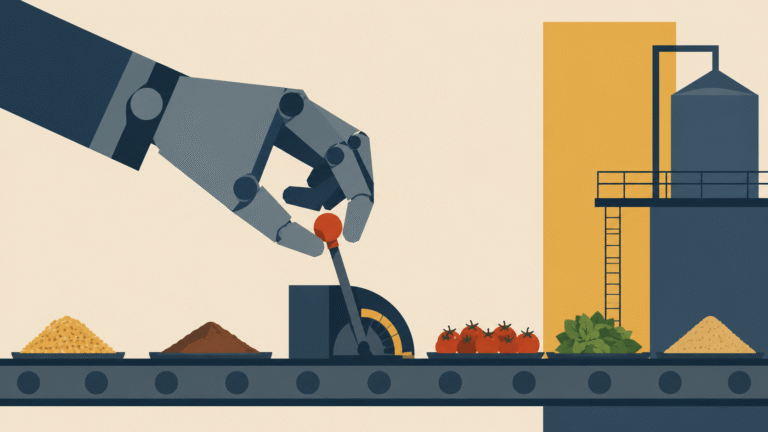
The food industry is very good at engineering anticipation
On the question of GLP-1 drugs – now being prescribed at scale for obesity – she is measured but worried. These drugs work, she acknowledges, partly because they dampen the addictive drive toward certain foods. But without addressing the underlying food environment and the neurological adaptations that have already occurred, she fears they will become a bridge to nowhere.
‘Medications have a lifespan. They work really well, and then efficacy is lost. People come off them, and everything comes back. You have to have something to go to, otherwise you just go back to where you were – and actually gain more weight and become more metabolically deranged than ever.’
On reformulation – whether food companies redesigning their products to remove the addictive architecture could help – she is open but not optimistic. Real food, she says, would be better. But she acknowledges the pragmatic argument: if the food environment is not going to change overnight, a less harmful version of processed food is better than what currently exists. She frames it carefully, as harm reduction rather than a solution.
Tarman does not believe change will come from government. The tax revenues are too significant, the industry lobbying too powerful, and now there is the convenient political cover of GLP-1 drugs. She thinks it will come from the public – through the kind of litigation and social stigmatisation that eventually moved the needle on tobacco and, more recently, opioids.
That is a warning the food industry should hear clearly. The opioid comparison is not rhetorical. Purdue Pharma’s collapse began not with regulation but with public accountability. The class action lawsuits that followed cost billions and destroyed reputations. If the food industry’s role in engineering metabolic addiction becomes as widely understood as the opioid industry’s role in engineering dependency, the consequences will be similarly severe.
‘I think it’s going to have to come from the people, in the way it did with tobacco and then with the opioid crisis. I don’t think it’s going to come from the top down.’
For decision-makers in food manufacturing, the strategic implication is stark. Reformulation is no longer a nutritional question. It is a liability question. The science of addiction – once confined to substance abuse clinics – is now being applied directly to food products. The question is not whether that reckoning is coming. It is whether the industry will act before it arrives.
Dr Vera Tarman's conversation with Metabolica
Dr Vera Tarman was interviewed for Metabolica on 25th March 2026
Dr. Vera Ingrid Tarman, FCFP, ABAM | LinkedIn