How did ultra-processed food become so dominant in modern diets?
Humans are designed to eat to survive. We were hardwired as hunter-gatherers to crave sweet foods, such as fruit, for nutrients, plus fat because it was calorie-dense and had to be eaten when available. The food industry took those biological drives and turned them against us.
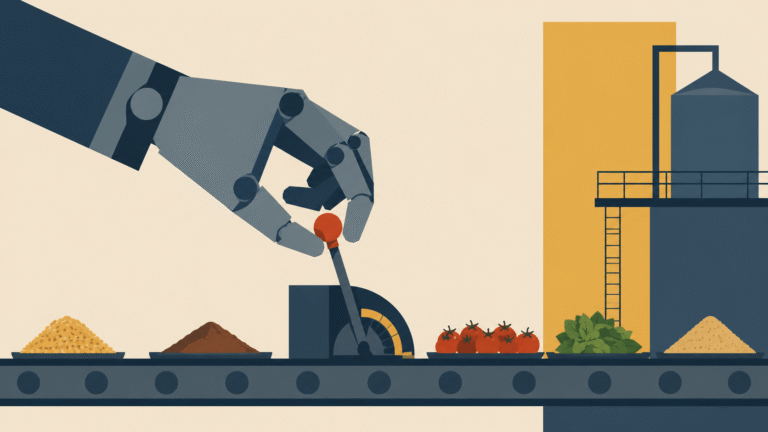
Ultra-processed foods began to spread during the mid-1970s. Food scientists began to learn how to break down proteins and grains to the cellular level so the body absorbs them almost instantly with a very short digestion period, before reassembling them with additives, colours and flavours to make them look like real food again.
The 1970s marked the beginning of the snacking boom. What used to be tea or coffee, and maybe sometimes a piece of fruit, before World War II was marketed as an extra eating occasion by food firms seeking new markets. Snacks were pushed increasingly heavily in higher-income countries in the 1980s and 1990s, and the model spread into Latin America and later China and other Asian and African countries. Obesity, which was barely visible in the 1930s, had become a global epidemic by the year 2000.
When governments have tried to tackle the issue seriously, what has worked?
The most complete evidence comes from Chile. When the country passed its Law of Food Labelling and Advertising in 2016, our University of North Carolina team undertook this evaluation research at UNC alongside University of Chile colleagues.
Three policies were implemented simultaneously. A warning label – a black octagon – was placed on the front of any food exceeding thresholds for sugar, sodium, saturated fat or calorie density. Meanwhile, a ban on advertising those products to children was introduced and later extended to all television from 6 am to 10 pm after marketers shifted to adult programmes that children were watching. At the same time, schools were prohibited from serving or allowing any labelled food, with children also educated on what the labels meant.
What impact did the policies have on Chilean consumers and industry?
Manufacturers switched from sodium to potassium salt almost immediately and rapidly reduced sugar in beverages, contributing to a decline in key nutrients bought by consumers. Overall, sugar purchases fell by roughly one-third, while sodium and calories both declined by around a quarter and saturated fat by approximately 16%.
We’ve seen a measurable reduction in childhood obesity nationwide, with a bigger decline among children exposed to the policies for two years than among those exposed for one.
How does the food industry fight regulation, and does it fight fairly?
They’ve built an extraordinary machine, with quasi-scientific bodies like the International Life Sciences Institute publishing industry-preferred data, lobbying in every region, funding academics to fight us wherever we work.
Whenever a law is proposed, they claim jobs will be lost. We consistently find otherwise; in Chile, which is a high-income country, Central Bank data showed no change in employment, wages or food company performance over ten years.
I had an off-the-record meeting with 15 of the 16 major global food companies in the late 2000s. They had the technology to eliminate sodium then, but didn’t use it until Chile gave them no choice. The gap between what they can do and what they choose to do is the whole story.
Do you expect Make America Healthy Again’s ‘real food’ agenda to lead to real change?
No. Towards the end of the Biden administration, we had an unhealthy food warning label bill moving through the Senate Health Committee but after the election, the food industry got to Trump, who then said, ‘No policy for MAHA’, and it was gone.
The only positive is that MAHA has made ultra-processed food more popular to talk about, but ultimately, I think the industry will stop everything that would have any impact.
Where do you see the most encouraging signs for the future of food policy?
Within a year, a billion people will be covered by warning labels and related food laws, while sugary drink taxes already reach several billion more. The momentum is real, and low-income countries, whose public health systems cannot absorb the alternative, are leading the way.
In Colombia, around 70% of food and drink on shelves carry a warning label, which, when combined with a 20%tax on ultra-processed foods, is huge. We are working with four African countries to take the same two-pronged approach.
In Brazil, 60 million schoolchildren will receive meals that are 90% real food this year, with 30% sourced from small farmers.
Professor Barry M Popkin was interviewed for Metabolica on 14th March 2026
Barry M. Popkin, PhD – UNC Gillings School of Global Public Health